
ORANGE PARK — At one point in her life, Dawn Mannion was a girl under the bridge. Homeless and living on the streets, McGirts Creek was once her home. It was a place where she found refuge in …
This item is available in full to subscribers.
To continue reading, you will need to either log in to your subscriber account, below, or purchase a new subscription.
Please log in to continueDon't have an ID?Print subscribersIf you're a print subscriber, but do not yet have an online account, click here to create one. Non-subscribersClick here to see your options for subscribing. Single day passYou also have the option of purchasing 24 hours of access, for $1.00. Click here to purchase a single day pass. |

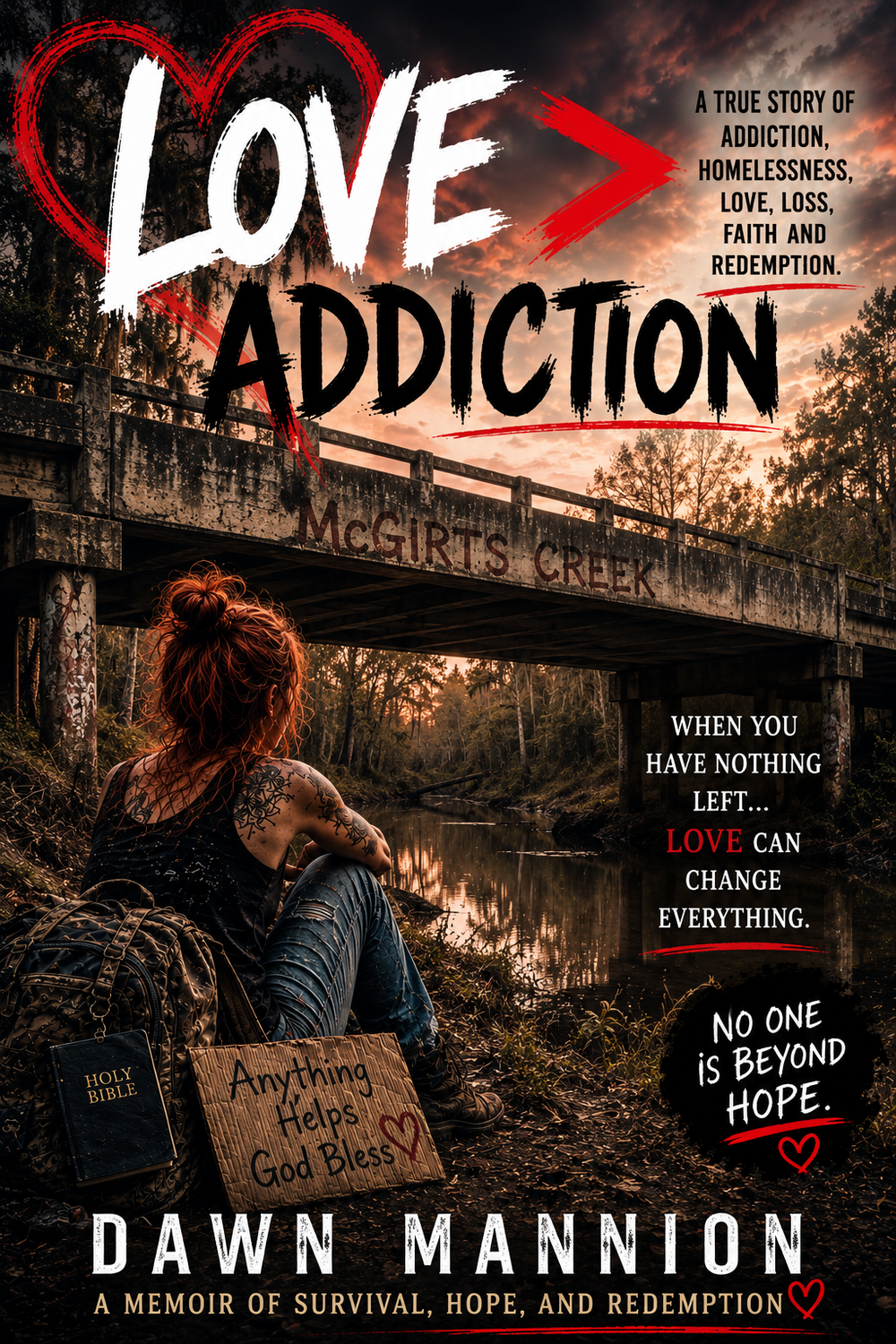


ORANGE PARK — At one point in her life, Dawn Mannion was a girl under the bridge.
Homeless and living on the streets, McGirts Creek was once her home. It was a place where she found refuge in loneliness. And where she often sat somberly waiting for hope.
But even those buried deep in the throes of hardship emerge. Living under her own bridge of trauma and addiction, Mannion found her way out. And it's her mission to help others do the same.
Mannion wrote "Love > Addiction: The Lies Addiction Told Me. The Love That Set Me Free" to tell her story from start to finish. It entails the journey of her breakthrough, from her struggles to her road to recovery.
Now available on Amazon, she said her book is a love letter to herself and others. A way to show them there is always a way out. Though it wasn't easy to write, she said her story needed to be heard.
"The hardest part is reliving all the moments I never wanted to be there for, much less revisit."
Mannion moved to Florida when she was 12 years old. Often finding herself hanging with the wrong crowd, she learned quickly how to cope using drugs and alcohol.
Addiction creeps in when you least expect it, and for Mannion, drugs didn't tell her she was going to be an addict. They told her she was going to become a better person than who she was. Drinking became the norm, which then led to cocaine and eventually spiraled into methamphetamine, she said.
She lived by the motto that anyone who tried to stop her didn't truly care.
"With a mentality like that, and you're in constant denial of it being your problem, eventually, it led to a point in my life where nobody wanted to be around me because it was their problem, not mine."
When she was kicked out of her parent's house, the streets became her home. She lived under bridges, slept on sidewalks and began a years-long path of drug use.
She thought she could quit anytime she wanted. And even after losing custody of her children, surviving two accidental fentanyl overdoses and witnessing countless loved ones and friends die, admitting that she needed help was difficult.
"Addiction isn't not being able to quit. Addiction is not wanting to quit," she said. "Drugs made me feel like I was a better person. And in reality, they took so much."
Seeing her boyfriend's struggle with fentanyl made her finally commit to changing her life for the better, she said.
"I realized that every time I bought my meth, I was giving him permission to buy his fentanyl. Slowly, I watched the man I love disappear into his addiction and it was horrible. It was heartbreaking."
Just days before getting sober, Mannion said she had reached her last straw. After being released from jail and with her boyfriend still behind bars, she moved into his father's house as a means to survive. From there, she made it her mission to turn things around.
Her mind was made up. She cleaned, repainted the walls and rid the room of anything that would trigger a relapse. She said she began to attend church, grow closer to God and attend Celebrate Recovery, a Bible-based 12-step program.
When her boyfriend got out of jail and saw all that she'd done, Mannion said he was motivated to do the same.
"I decided that if anybody's got to change this, it's got to be me," she said.
Throughout her book, Mannion said there is a continuous pattern of love being shown in her life. And no matter what she went through, it still found a way to creep through.
Now 11 months sober and reconnecting with the ones she lost along the way, Mannion's goal is to be an inspiration and voice to others and challenge the harsh stigmas of homelessness and addiction.
"The original plan was to get people to open their eyes and realize that homeless people are people. They're not vermin. They're not something that needs to be eradicated. It's a problem that needs to be solved, yes, but it's not just them."
After selling her first 100 copies, Mannion said she plans to donate another 100 to local jails, recovery programs and organizations that serve those struggling with addiction.
"That's what makes my book important because I know their life. I know their struggle. I lived it every single day for eight and a half years almost," she said. "I did that. And if I can be the one to tell them that they could do it too ... that could change lives."
Mannion said her recovery journey is still fueled by a poem she read while in jail. "Holes" by Scott Lewis details the importance of reaching out and giving hope to those stuck. She hopes her book will do that.
"It doesn't matter how far into addiction you are," she said. "You can be at the beginning; you could be at the end. You are still capable. There's still hope for you."
